
Moving to Madrid: areas, housing and daily life
What to consider before settling in Madrid — neighbourhood character, commuting, schools, housing and the rhythm of a major inland capital.
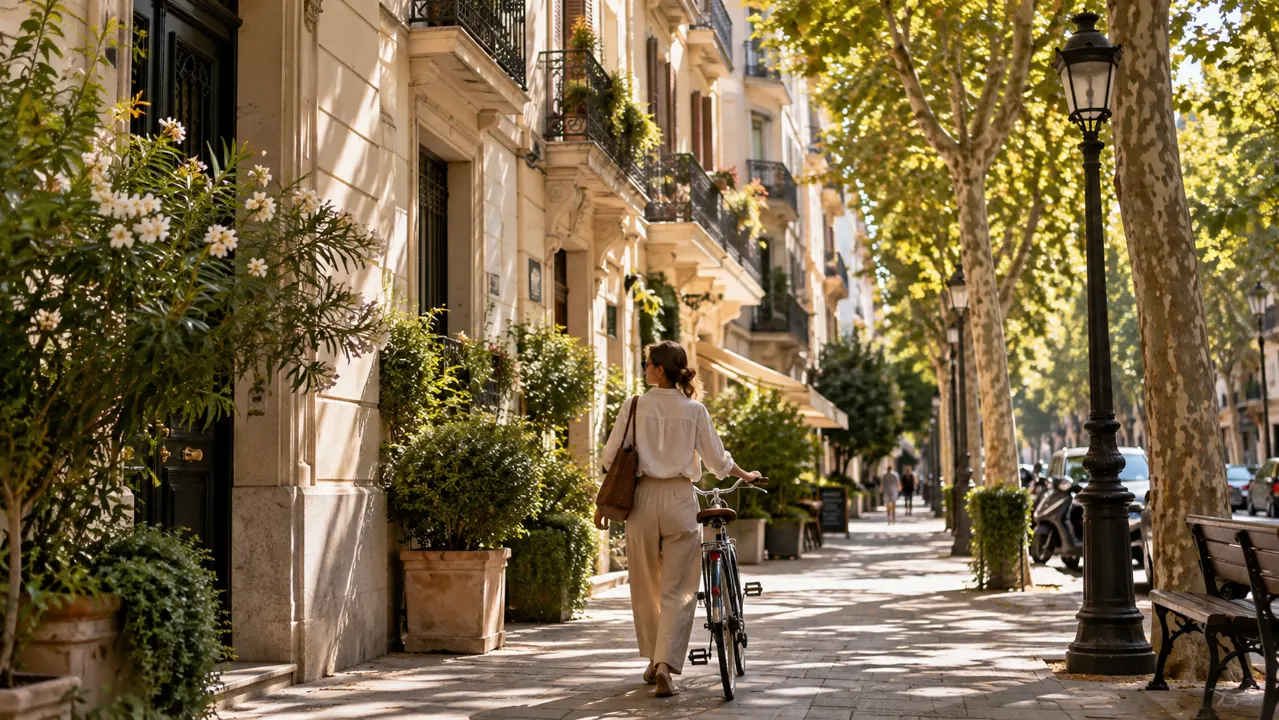
Madrid is often the strongest Spanish option for people whose move depends on employment, professional networks or frequent travel within the country. It has extensive public transport, major employers, universities, hospitals and cultural amenities. The scale that creates opportunity also means neighbourhood and commute choices matter greatly.
Central districts such as Centro, Chamberí, Salamanca and Retiro offer walkability and established urban life but usually less space for the budget. Families also examine areas such as Chamartín, Arturo Soria, Moncloa-Aravaca and municipalities to the north or west. A map distance can be misleading: test the real peak-time journey to work and school.
Madrid's international and bilingual school choice is broad, but popular schools and year groups can fill. If education is central, start with viable schools and work back to neighbourhoods rather than signing a lease first. Confirm the teaching language, curriculum, transport and all additional fees.
Housing quality varies even within the same district. Check insulation, cooling, heating, natural light, lift access, noise and whether the tenancy conditions are lawful. Madrid summers can be intensely hot and winters colder than many coastal newcomers expect, so energy performance affects comfort and cost.
Daily life can be managed without a car in much of the city, while suburban choices may change the calculation. The city rewards Spanish-language ability even where workplaces use English. Registering locally, arranging healthcare and dealing with schools and utilities becomes easier when at least one adult can handle routine Spanish.
Madrid is a strong fit when career access, services and connectivity outweigh the desire for immediate coast. Visit candidate districts morning and evening, compare the complete monthly budget and avoid choosing solely by proximity to tourist landmarks.
Sources
- Residence in Spain — Government of Spain
This guide provides general information for planning purposes. It does not constitute legal, tax, financial, immigration or medical advice. Always confirm decisions with a qualified specialist authorised to advise for your circumstances.