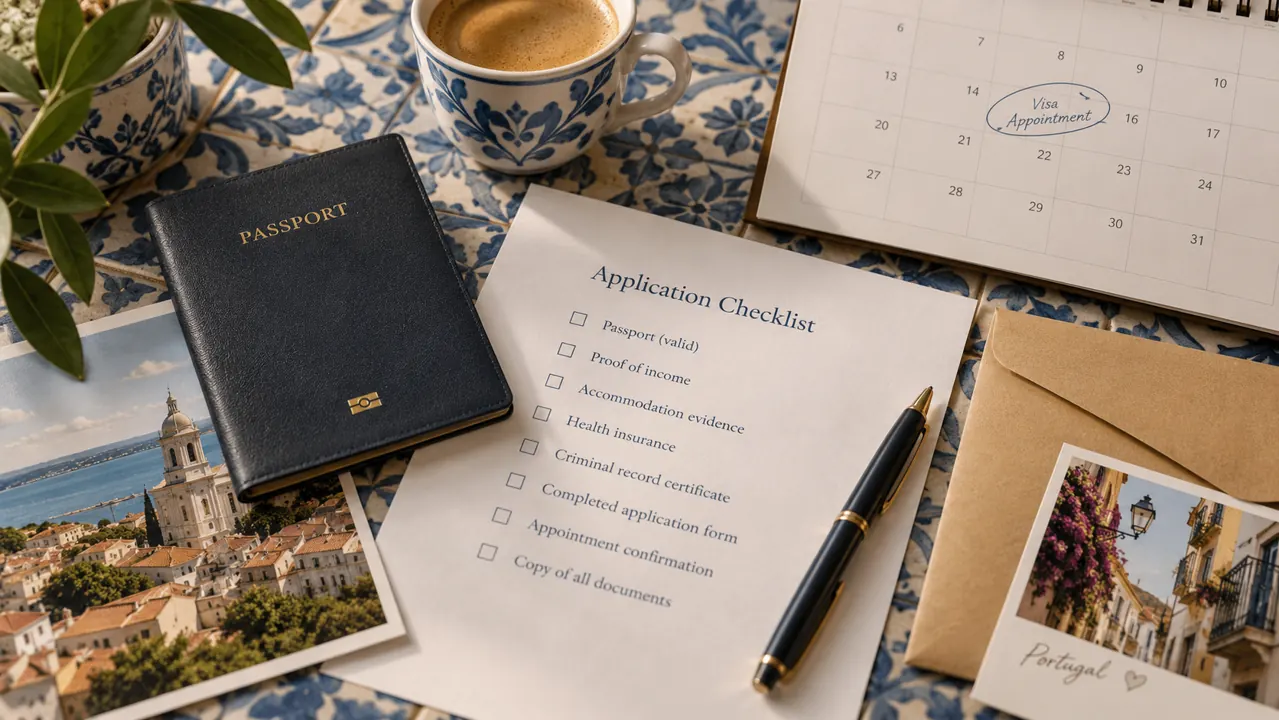
Moving to Portugal: decisions before and after arrival
A practical Portugal move checklist covering residence, documentation, healthcare, housing, family needs and the handover into settled life.

General information only. Expat Pathways does not provide tax, legal, investment, pension, immigration or medical advice. Sources were checked editorially on 11 September 2026; this article has not been reviewed by a qualified professional. Obtain advice for your countries, residence position and circumstances before acting.
A successful move is a sequence of decisions with dependencies. Your right to live in Portugal, the documents supporting it and the timing of accommodation or employment should be considered together. This guide also helps existing residents identify unfinished administrative tasks; it does not assume that readers are British or applying through the same route.
Confirm the route before committing to the timetable
Establish which rules apply to your nationality, family relationships and proposed activity. European free-movement arrangements and routes for other nationals are different. Obtain the current official checklist for your circumstances from the responsible authority or consulate. Ask a qualified immigration professional about uncertainties before making non-refundable commitments.
Distinguish permission to enter from the steps required to remain, work or renew residence. Record each household member's position separately. Do not assume that a partner's approval automatically completes every dependant's application. Use official appointment and communication channels, and retain receipts and copies of what you submitted.
Build a document register
List identity documents, family-status evidence, financial records and any required certificates. Note who issues each document, whether translation or legalisation is required and whether a validity period applies. Start with documents that take longest to obtain, while avoiding ordering time-limited items too early.
Store originals securely and keep a clear digital copy set. Use consistent names and dates across applications. If a record contains an error or a different spelling, ask how to resolve it before submission. Do not send passport copies or complete bank statements through informal messaging merely because someone offers a faster appointment.
Choose housing around daily life
Compare neighbourhoods using the journeys you will actually make: work, school, healthcare, shopping and airport travel. Visit at different times if possible. Check the property itself for heating, ventilation, accessibility, noise and internet suitability rather than judging only photographs.
Before signing, understand the term, notice provisions, deposits, included charges and who is responsible for repairs. Ask an independent professional to explain unfamiliar contractual terms. Prepare a fallback budget for temporary accommodation if the preferred home or administrative timetable changes.
Arrange healthcare and family continuity
Confirm healthcare entitlement and registration steps for each person. Ask about the gap between arrival and the start of any cover, especially if employer insurance ends in another country. Transfer medical information through suitable clinical channels and seek advice on prescription continuity.
For children, obtain school admission requirements, availability and a full fee schedule where relevant. Include transport, meals, activities and calendar differences in the decision. A place on a waiting list is not a confirmed school place; obtain written confirmation before building the move around it.
Coordinate money and administration
Establish which identification and tax-registration steps are required for the services you need. Tell existing financial providers about your actual residence through official channels and check that you can keep using them. Preserve access to authentication and essential payments during the move.
Keep a dated travel and accommodation record for professional tax assessment. Immigration residence and tax residence are distinct. Where you retain work, property or other connections abroad, arrange a coordinated review rather than assuming departure ends all obligations there.
Turn arrival into an ongoing calendar
Record renewal dates, document requests, policy anniversaries and confirmed filing obligations. Keep correspondence from authorities and providers in one place. Review the household budget after several months of actual spending, then address financial planning beyond the move through the related guides.
Permanent residence and citizenship are separate legal processes with conditions that must be checked under the rules applying when you act. This guide makes no promise of approval or a fixed path to nationality.
Common questions
- Is this only for UK nationals?
- No. Start with the rules applying to your nationality and circumstances. UK-specific official guidance is identified as such.
- Can I rely on a fixed approval timeline?
- Use the responsible authority's current information and keep contingency time. This guide does not promise an approval date.
Sources
- Living in Portugal — information for British nationals — UK Government
- CIRS Article 16 — tax residence — Portuguese Tax Authority
- Health insurance when living abroad — European Union — Your Europe
This guide provides general information for planning purposes. It does not constitute legal, tax, financial, immigration or medical advice. Always confirm decisions with a qualified specialist authorised to advise for your circumstances.