
Filing a tax return in Spain as an expat
How to prepare for Spanish filing when income, property, pensions or investments span several countries.
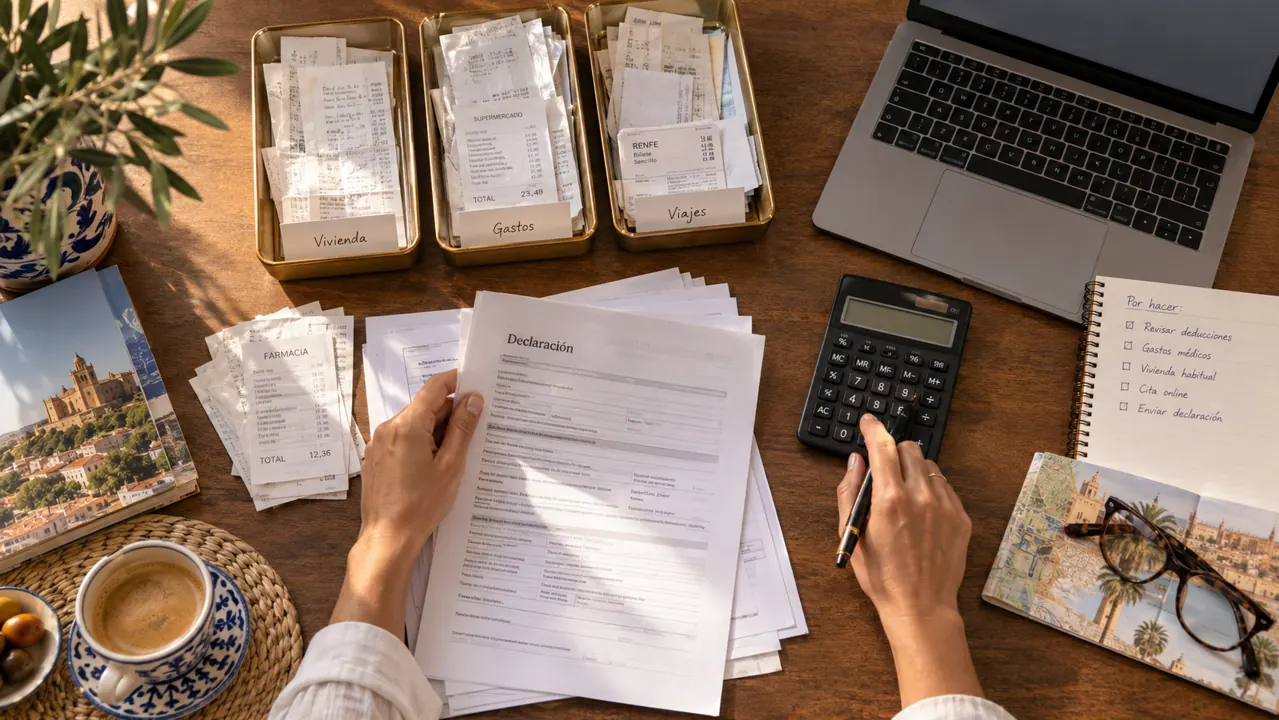
A Spanish tax return for an international resident may include income and gains from outside Spain, not only money earned or received locally. Begin by confirming residence for the calendar year and identifying every country in which a return, payment or treaty claim may also be required.
Confirm the filing position before calculating tax
Tax residence, filing obligation and tax due are related but different questions. Establish whether Spain treats you as resident for the whole calendar year, whether another country also asserts residence and whether a treaty affects the result. Do not assume that a low income, foreign withholding or a return filed elsewhere removes Spanish obligations.
Build a complete income schedule
List employment, self-employment, company income, rent, pensions, interest, dividends, share awards and capital gains separately. Record gross amounts, payment and disposal dates, ownership proportions, tax withheld and the original currency. Include income retained overseas or paid into a foreign account.
Reconcile the schedule to bank, broker, pension and property statements. Investigate gaps before filing. For jointly owned assets, confirm the reportable ownership rather than dividing everything automatically.
Handle foreign tax and treaties carefully
Foreign tax may support a credit, exemption or refund, but the mechanism depends on domestic law and the applicable treaty. Different countries can classify the same payment differently or recognise it in different periods. Retain the foreign return, assessment, withholding certificate and payment evidence.
If advisers in two countries are involved, give both the same facts and ask who is responsible for reconciling differences. A Spanish return should not contradict a foreign residence claim without a documented explanation.
Prepare investment and property records
For disposals, keep acquisition confirmations, improvement costs, transaction fees and ownership changes. For rental property, retain income, allowable-cost evidence, use periods and taxes paid. A broker's annual summary may not apply Spanish tax rules, so preserve transaction-level data.
Foreign-asset information reporting, including Modelo 720 where applicable, is separate from declaring income and gains. Review current categories, values and repeat-filing conditions using Spanish Tax Agency guidance.
Use consistent exchange rates and evidence
Spanish reporting is in euros. Record the exchange-rate source and method used for each class of transaction and apply it consistently. Keep calculations, source documents, submitted returns, payment confirmations and correspondence together by tax year.
Review before submission
Check names, tax numbers, address, residence status, autonomous community, bank details, income categories, foreign tax, carry-forwards and previous-year positions. Compare the draft with the asset register and any foreign returns. Ask the preparer to explain material estimates and unresolved assumptions.
A useful tax adviser should provide a copy of the filed return, calculation, payment instructions and a short list of matters to monitor for the next year. Seek advice before—not after—a pension withdrawal, investment disposal, property sale, large gift or business change.
Common questions
- Do I report income kept in an overseas account?
- Spanish tax residents are generally assessed on worldwide income. Where the money is held does not by itself determine whether it is reportable.
- Does foreign tax already paid remove Spanish filing?
- Not automatically. A treaty or foreign-tax credit may provide relief, but the income and supporting tax may still need to be reported.
- Is Modelo 720 part of the income-tax return?
- No. It is a separate information return for certain foreign assets and rights. Confirm current requirements and filing history.
- What records should I keep?
- Keep residence evidence, income and transaction statements, acquisition costs, foreign returns, withholding certificates, exchange-rate calculations and proof of filing and payment.
Sources
- Individual resident in Spain — Spanish Tax Agency
- Spanish Tax Agency — Agencia Tributaria
- Spain: tax treaties — HM Revenue & Customs
- Modelo 720: information return for assets and rights abroad — Spanish Tax Agency
- Who are the authorised bodies? — CNMV
- FCA Firm Checker — Financial Conduct Authority
- U.S. citizens and resident aliens abroad — Internal Revenue Service
- State Pension if you retire abroad — UK Government
- Transferring to an overseas pension scheme — HM Revenue & Customs
- Considering a defined benefit pension transfer — Financial Conduct Authority
- Living in Spain — UK Foreign, Commonwealth & Development Office
- Planning your cross-border inheritance — Your Europe
This guide provides general information for planning purposes. It does not constitute legal, tax, financial, immigration or medical advice. Always confirm decisions with a qualified specialist authorised to advise for your circumstances.